Do Horses Qualify for the Texas Ag Exemption?
Horses can qualify for the Texas ag exemption when raised for breeding or sale, but recreational horses do not. Here are county acreage and animal unit rules.
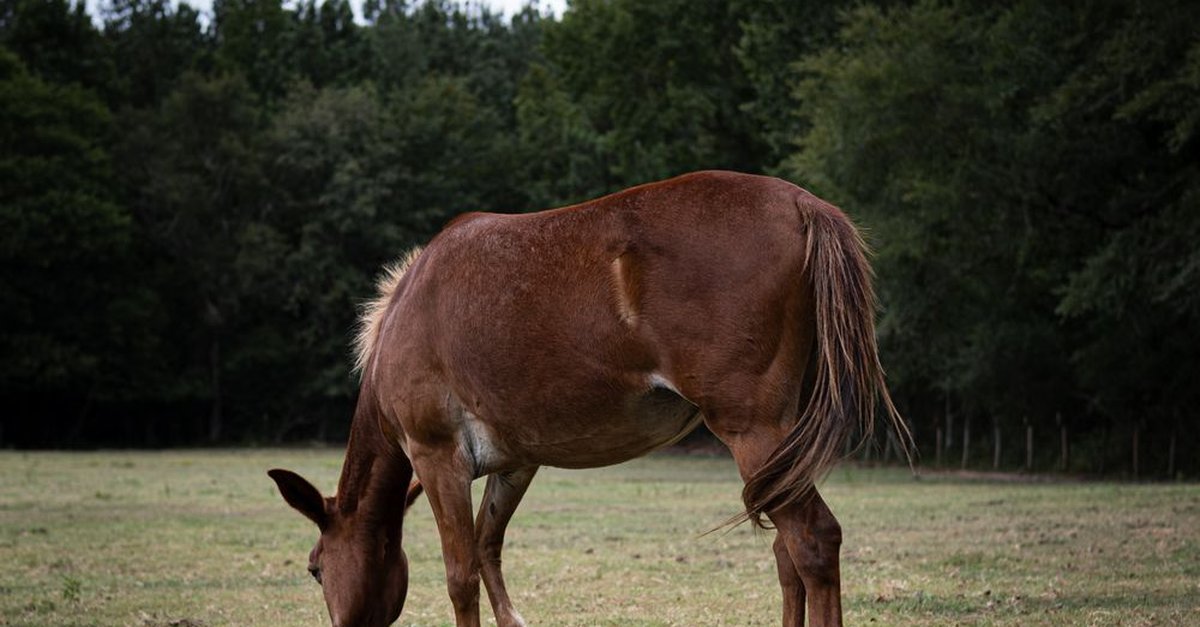
Yes, horses qualify for the Texas agricultural exemption, but only when the land is used to raise them for a commercial agricultural purpose such as breeding, sale, or training for sale, and only to the degree of intensity generally accepted in your county. Horses kept primarily for recreation, showing, or pleasure riding do not qualify, and that distinction is the single most common reason horse properties lose their ag valuation. If your operation meets the standard, the savings are the same as any other ag exemption covered in our agricultural exemption guide: your land is valued on its agricultural productivity instead of its market value, which typically cuts the tax bill by 70 to 90 percent.
Do Horses Qualify for the Texas Ag Exemption?
The short answer is yes, with conditions. Texas Property Tax Code Section 23.51 defines qualified open-space land as land devoted principally to agricultural use to the degree of intensity generally accepted in the area, and it has been in agricultural use for five of the preceding seven years. Raising livestock is an agricultural use under the code, and the Texas Comptroller's Manual for the Appraisal of Agricultural Land explicitly includes horses among the livestock that can support an ag valuation.
The legal test has three parts. First, the land must be used principally for agriculture, meaning more than half of its use must be the horse operation. Second, the operation must meet the degree of intensity generally accepted in the area, which your county appraisal district defines in its published guidelines. Third, the land must have a qualifying use history of five of the previous seven years, unless it already carries an ag valuation and you are simply maintaining it.
The practical question is not whether horses can qualify. It is whether your horse activity looks like a farm operation or a hobby. Counties distinguish the two by looking at breeding records, sales receipts, registration papers, and the number of animals relative to the size of the land.
What Counts as Raising Horses for Agricultural Use?
The most reliable qualifying activities are breeding and selling horses. A breeding operation that keeps broodmares, stands a stallion, and sells foals is a commercial agricultural enterprise, and Texas appraisal districts approve this type of operation routinely. The same is true for a ranch that raises horses to sell as ranch or working horses, and for farms that raise and sell horses to buyers in other states.
Training horses for sale also qualifies in most counties when the training is part of a documented sales operation rather than a service for outside owners. The key is that the horses are inventory of a business, not pets. If you sell at least one horse most years, keep sales receipts, and maintain the land to support the herd, you have a defensible agricultural operation.
Land used to support the herd counts as agricultural even when it is not pasture. Hay fields that feed your horses qualify, as does the land under the barn, corrals, and turnout pens, because those improvements serve the agricultural operation. In practice, most appraisal districts expect the majority of the acreage to be in pasture or hay production, with corrals and pens forming a small share.
Which Horse Activities Do NOT Qualify?
Recreational riding is the classic denial. A property where horses are kept so the owner can ride on weekends, keep a family pony, or board horses for neighbors is not in agricultural use, regardless of how many horses are on it. Showing and racing also fail the test when the horses are not raised for sale, because the activity is personal or competitive rather than agricultural.
Boarding is the most contested category. A commercial boarding stable earns income, but the income comes from providing a service to other people's horses, not from raising livestock on your land. Most counties require the horses to be owned by the applicant and raised on the property for sale or breeding. A few counties have approved boarding when the operator also breeds and sells horses and the boarding is incidental, but you should not count on that interpretation without written confirmation from your appraisal district.
Horses used for lessons, trail rides, therapy programs, and dude ranch experiences face the same problem. These are service businesses, and Texas law draws the line at agricultural production. If your county denies a service-based operation, the denial is consistent with the Comptroller's guidance, so do not expect to win an appeal by arguing that the horses are well cared for. The question is always whether the land produces an agricultural commodity.
What Are the County Requirements for a Horse Ag Exemption?
County requirements vary more than most landowners expect, and the local standards are the ones that matter. Our guide to Texas ag exemption requirements explains the statewide rules, but the horse-specific numbers come from your appraisal district. Across the 254 Texas counties, the common minimum for horse operations is 10 acres, but several counties set different rules. Travis County requires 12 acres east of IH-35 and 20 acres west of IH-35 for grazing operations. Harris County requires requalification every three years. Collin County sets no fixed acreage minimum but requires at least 2 animal units year-round. The filing deadline does not vary by county: Tax Code 23.54(d) requires the application before May 1, which makes April 30 the last valid day everywhere in Texas.
Animal unit minimums are the second variable. An animal unit, or AU, is a standardized measure of grazing demand, defined as one 1,000-pound animal. Counties publish minimum herd sizes to prove the operation is real. Collin and Williamson require 2 AU. Comal, Dallas, and Travis require 4 AU. Guadalupe requires 5 AU. A horse typically counts as 1 AU, with larger horses counting slightly more, so a 4 AU county expects roughly four adult horses on the tract.
Before you buy land or build a horse operation, download your county's agricultural guidelines and read the horse-specific language. Counties publish these as PDFs, and the Comptroller's Manual for the Appraisal of Agricultural Land is the statewide reference. If the guidelines are unclear, call the appraisal district and ask whether horses raised for breeding and sale qualify on your acreage, and get the answer in writing if possible.
How Many Horses and Acres Do You Need?
There is no statewide formula, but the practical pattern is consistent. On 10 to 20 acres, most counties expect at least 2 to 4 animal units, which means 2 to 4 adult horses, and they expect the land to be managed pasture, not bare dirt with a round pen. On 20 to 50 acres, the expectation scales with carrying capacity: improved pasture in Central Texas supports roughly 1 AU per 3 to 5 acres, while native pasture supports 1 AU per 5 to 7 acres in the Blackland Prairie and 1 AU per 8 to 10 acres in the Post Oak Savannah.
The stocking rate matters because it ties directly to the degree of intensity test. If your county expects 1 AU per 5 acres of native pasture, a 20-acre tract should carry about 4 AU, and an appraisal district will question an operation running 2 horses on 40 acres of good pasture. Overstocking is also a problem, because damaged pasture and mud suggest the land is not being managed to accepted standards.
For small tracts, the math is unforgiving. A 5-acre property in most counties cannot meet the degree of intensity standard for horses because the land cannot support enough animals to look like a commercial operation. Intensive uses such as nurseries and vineyards have lower acreage floors, but horses generally need room. If your tract is under 10 acres, ask your appraisal district directly before filing, and consider beekeeping or wildlife management as alternatives that fit smaller properties.
How Do You Apply and Document a Horse Ag Exemption?
File the agricultural land application, known as Form 1-D-1, with your county appraisal district by April 30 of the tax year. That date is the same in all 254 counties. Our step-by-step application guide walks through the form, and the steps below cover the horse-specific evidence. The application asks for the property description, the agricultural use, and the number and type of livestock. Attach your documentation up front: registration papers for broodmares and stallions, foal records, sales receipts, a lease if the horses graze on land you do not own, and photos of the pasture, fencing, and water supply.
After approval, keep the documentation current every year. Appraisal districts can review the operation at any time, and most require the same evidence you submitted initially. Update your file when you sell a horse, add a mare, or change the stocking rate. A dated log of purchases and sales, with receipts, is the strongest evidence you can keep, because it shows a continuous commercial pattern rather than a one-time filing.
The use history rule deserves attention for new owners. Land must have been in agricultural use for five of the previous seven years to qualify, but if the land already has an ag valuation, the history requirement is already satisfied, and you simply continue the use. If you buy land without an ag exemption and start a horse operation from scratch, the appraisal district may grant the valuation in year one with a history of prior agricultural use on the same land, but a genuinely new operation may face a multi-year path. Check with your county before you assume either outcome.
What Mistakes Trigger Audits and Rollback Taxes?
The most expensive mistake is claiming the exemption for a recreational herd. When an appraisal district discovers that the horses are pleasure horses, it removes the ag valuation, and if it finds the use of the land changed, it imposes rollback tax for the three years preceding the year of the change. The bill is the difference between the taxes paid and the taxes that would have been owed at market value for each of those three years, with no interest added. We explain the full rollback penalty calculation in a separate guide. On a tract near a growing city, three years of that gap still adds up fast, because the market value has been climbing while the ag value stayed low.
The second mistake is failing the use history test. If you convert land out of agriculture, or if you buy land that was not in agricultural use, the exemption can be denied or removed, and the rollback clock starts. Selling a horse herd and leaving the land idle for a season is enough to trigger review in most counties, so keep the operation active year-round.
The third mistake is documentation gaps. A county cannot verify what you cannot prove. Owners who keep no sales receipts, no registration papers, and no photo record lose appeals that owners with complete files win. Treat the file as part of the business, because the appraisal district will treat it as part of the evidence.
Horses or Wildlife Management: Which Fits Your Land?
If your property cannot support a credible horse operation, wildlife management is the strongest alternative. Texas allows land that qualifies for ag valuation to convert to wildlife management use, which applies the same productivity valuation when you manage the land for native wildlife through at least three of seven approved practices such as habitat control, erosion control, predator control, supplemental water, supplemental food, and census counts.
Wildlife management has two advantages for small or marginal tracts. It has no herd requirement, so a 10 to 20 acre tract in the Hill Country can qualify by documenting habitat work instead of stocking animals. And it removes the day-to-day burden of livestock, which suits owners who want the tax savings without the animals. The tradeoff is that the land must have been in ag use for five of the previous seven years, and the conversion requires a written wildlife management plan. Our wildlife vs. ag exemption comparison covers the conversion rules in detail. Compare the horse path and the wildlife path with your county's rules before you commit, because the requirements differ by region.
If your horse operation qualifies, the choice is simple: keep the horses and the file. If it does not, wildlife management gives you a documented path to the same tax treatment, and it protects the land from development pressure that would otherwise raise your tax bill.
Conclusion
Horses qualify for the Texas ag exemption when they are raised for breeding or sale to the degree of intensity your county expects, and they do not qualify when they are kept for recreation, boarding, or showing. Confirm the acreage, animal unit, and deadline rules in your county, build a complete file of registration and sales records, and keep the operation active every year. For landowners whose property cannot support a commercial herd, wildlife management offers the same productivity valuation without the animals. If you want help matching your land to the right exemption, find a property tax consultant in our directory, or check our guide to the animals that qualify for the Texas ag exemption for a full comparison of qualifying species.
Sources
This reflects Texas law as of August 2026, including HB 1743 (86th Legislature, effective September 1, 2019), which cut the open-space rollback from five years to three, and HB 3833 (87th Legislature, effective June 15, 2021), which removed rollback interest.
- Texas Tax Code Section 23.51 - qualified open-space land and the degree of intensity standard
- Texas Tax Code Section 23.55 - additional tax on change of use, three preceding years, no interest
- HB 1743 (86th Legislature) and HB 3833 (87th Legislature)
- Manual for the Appraisal of Agricultural Land - animal unit conversions and stocking rate methodology
- Form 50-129 - the 1-d-1 open-space application
Verified August 6, 2026. Animal unit requirements and minimum acreage are set by each appraisal district; confirm your county's current figures before filing.