Bell County Ag Exemption: 1-d-1 Valuation for Central Texas Land
Learn how to get an ag exemption in Bell County, Texas. Covers Bell CAD livestock, beekeeping, and crop standards, minimum acreage, and the 1-d-1 process.

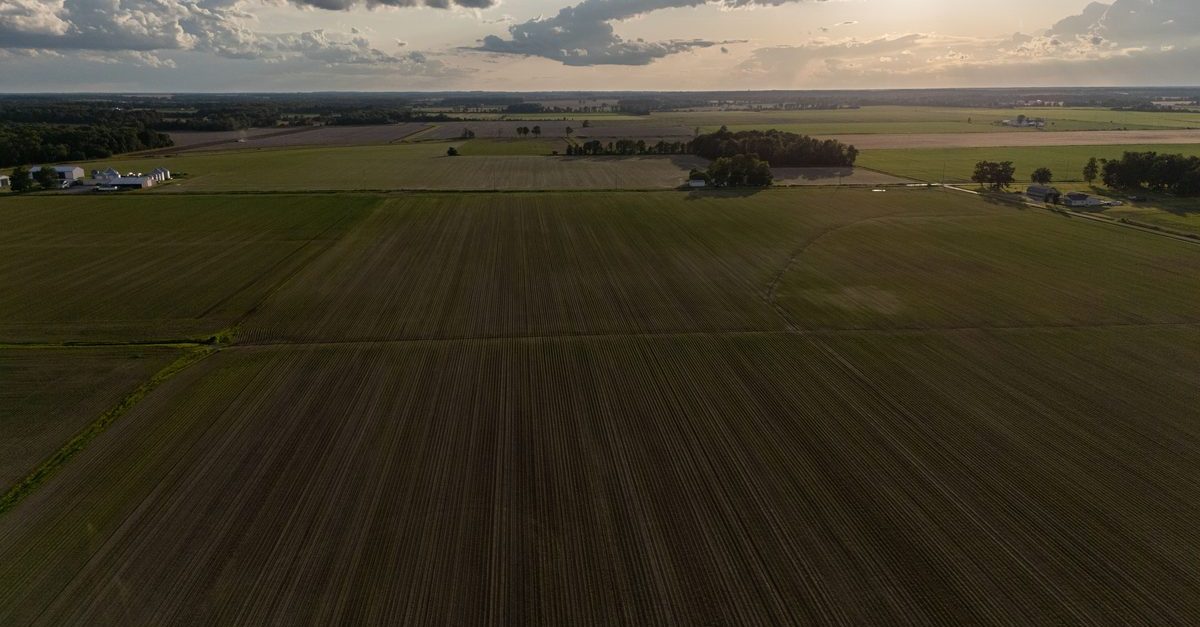
Getting an agricultural exemption in Bell County means working with the Bell County Appraisal District (Bell CAD) at the crossroads of the Blackland Prairie and Cross Timbers ecoregions. Bell County sits in the heart of Central Texas, where dark fertile soils support cattle grazing and row crops, and the expanding urban footprint of Killeen, Temple, and Belton puts increasing development pressure on agricultural land.
The Fort Cavazos military installation, formerly Fort Hood, anchors the county's economy and population. This growth makes the 1-d-1 agricultural valuation a critical tool for landowners who want to keep their property in productive use while avoiding property taxes based on rising market values.
With an average county tax rate around 1.9 percent and a gap of more than $8,000 per acre between market value and agricultural productivity value, the annual savings on a qualifying 50-acre tract can exceed $7,500. If you own 10 or more acres in Bell County, agricultural valuation can reduce your property tax burden by 70 to 90 percent on qualifying land. This guide covers what Bell CAD requires, how degree of intensity standards work for different agricultural uses, what qualifies for special valuation, and how to file your 1-d-1 application before the April 30 deadline.
How Does the Bell County Ag Exemption Work?
The agricultural exemption in Texas is a special method of property appraisal under Article 8, Section 1-d-1 of the Texas Constitution. Under this provision, qualified open-space land is valued based on its agricultural productivity rather than its full market value. For Bell County landowners, this distinction is especially important because the Killeen-Temple-Belton corridor has driven land values to levels that bear no relation to agricultural income.
Bell CAD uses productivity values set by its Agricultural Appraisal Advisory Board. For the 2025 tax year, these values range from $74 per acre for Class 2 native pasture (R2) up to $382 per acre for Class 1 dry cropland (DC1). Compare that to a typical Bell County rural market value of $8,000 to $15,000 per acre, and the savings become obvious.
To qualify for 1-d-1 valuation, your land must satisfy three criteria. First, the land must be devoted principally to a qualifying agricultural use. Livestock grazing, hay production, crop cultivation, beekeeping, and wildlife management all qualify. Second, your agricultural use must meet the degree of intensity generally accepted in Bell County. Bell CAD establishes these standards for each type of agricultural use based on soil type, rainfall, growing season, and regional practices. Third, you must file a completed 1-d-1 application (Form 50-129) with Bell CAD by April 30 of the current tax year.
Bell County also offers the older 1-d appraisal method, which is more restrictive. Under 1-d, the owner must be an individual, agriculture must be the primary source of income, and the land must have been in agricultural use for at least three years. Most Bell County landowners use the 1-d-1 method because it does not require agriculture to be the primary business and allows ownership through LLCs, corporations, trusts, and partnerships.
What Are the Minimum Acreage Requirements in Bell County?
Bell County requires a minimum of 10 acres to qualify for agricultural valuation. This minimum applies across most agricultural use types, including livestock grazing, hay production, and crop cultivation. For beekeeping, the minimum is 5 acres with a specific hive density requirement.
The 10-acre minimum is consistent with other Central Texas counties, but Bell CAD evaluates each application based on the specific agricultural use and the characteristics of the individual tract. A 10-acre property with deep alluvial soils in the Leon River bottom has a much higher carrying capacity than a shallow-soil tract in the western part of the county with exposed limestone. Bell CAD field inspectors account for these differences during site visits.
For smaller acreage tracts that include a homesite, Bell CAD generally treats the homesite as a separate land segment under the homesite cap provisions of the Texas Property Tax Code. Only the portion of land actually devoted to agricultural use receives the productivity valuation. The homesite and any non-qualifying acreage such as roads, barns, or recreational areas are appraised at market value.
One thing to get straight about the 1-d-1 process: the land must have been in agricultural use for five of the preceding seven years. That history attaches to the land, not the owner, so newly purchased land can qualify immediately if it has an established agricultural history. Raw land with no history has to build the record first.
Livestock Grazing Standards in Bell County
Livestock grazing is the most common agricultural use in Bell County. The county sits in the transition zone between the Blackland Prairie and the Cross Timbers, giving it a mix of improved and native pasture that supports cattle, goats, sheep, and horses.
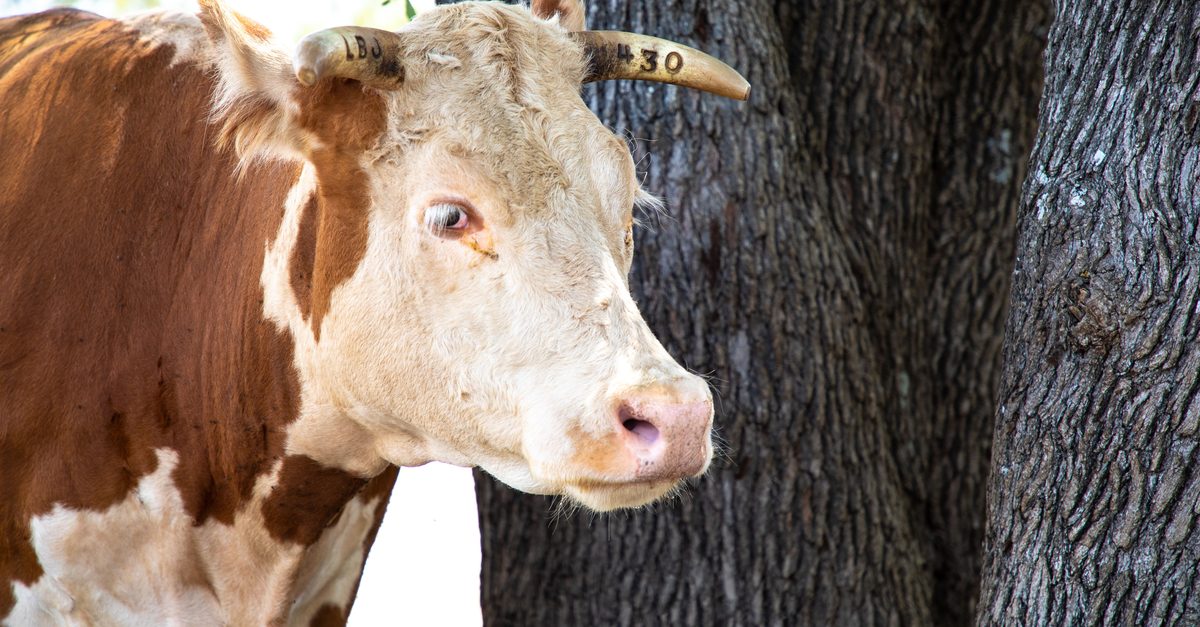
One animal unit equals one mature cow with calf, one mature bull at 1.25 animal units, six ewes or six does making one animal unit, or one horse at 1.0 to 1.25 animal units. The specific animal unit minimum depends on the carrying capacity of the individual property. In the Blackland Prairie portion of Bell County, improved pasture can generally support one animal unit per 5 to 10 acres. Native pasture in the western part of the county requires more acreage, typically one animal unit per 15 to 25 acres.
These are guidelines based on the 2025 Bell CAD Mass Appraisal Report and regional norms from adjacent counties. Your actual stocking rate depends on soil quality, forage type, and management practices. Bell CAD does not publish a standalone proprietary agricultural manual, so the best practice is to call their office at (254) 939-5841 and confirm the current intensity standard for your specific property type.
Horses require special attention in Bell County. Only breeding operations and commercial training facilities qualify as agricultural use. Personal pleasure riding, boarding for others, show horses, and recreational stables do not qualify under Bell CAD guidance. This is a common mistake made by new landowners in the Killeen and Temple areas who buy a few acres for personal equestrian use and assume it qualifies for agricultural valuation.
Goats and sheep are popular choices for smaller acreage properties in Bell County. Five to six head typically equal one animal unit, and the regional norm requires at least two to five total animal units to demonstrate a degree of intensity. These smaller livestock can be a practical option for 10- to 20-acre tracts that may not support a full cow-calf operation.
Beekeeping Requirements in Bell County
Beekeeping is one of the most accessible agricultural uses for smaller properties in Bell County. The state minimum acreage for beekeeping is 5 acres with a cap of 20 acres. Bell County follows this statutory range and applies a specific hive schedule that has been publicly confirmed by Bell CAD staff.
For a 5-acre property, the minimum requirement is 6 hives. For each additional 2.5 acres beyond the initial 5, you need to add one more hive. On a 20-acre property, the minimum is 12 hives. Contracted hives from a professional beekeeper count toward this requirement, which is a important option for landowners who do not want to manage bees themselves.
The beekeeping exemption applies only to properties in the 5- to 20-acre range. If your property is larger than 20 acres, you must use a different qualifying agricultural use. Beekeeping can still be part of your overall operation on a larger property, but it must be combined with another qualifying use such as livestock grazing or hay production.
One thing to note about Bell County beekeeping is that maintaining healthy, productive colonies throughout the year is necessary to demonstrate ongoing agricultural use.
Crops and Hay Production in Bell County
Row crops and hay production are traditional qualifying uses in Bell County's Blackland Prairie soils. The standard crops grown in the county include cotton, grain sorghum, wheat, corn, and sunflowers. Bell CAD requires at least one harvest in a typical non-drought year, with a minimum of approximately 5 acres devoted to cultivation.
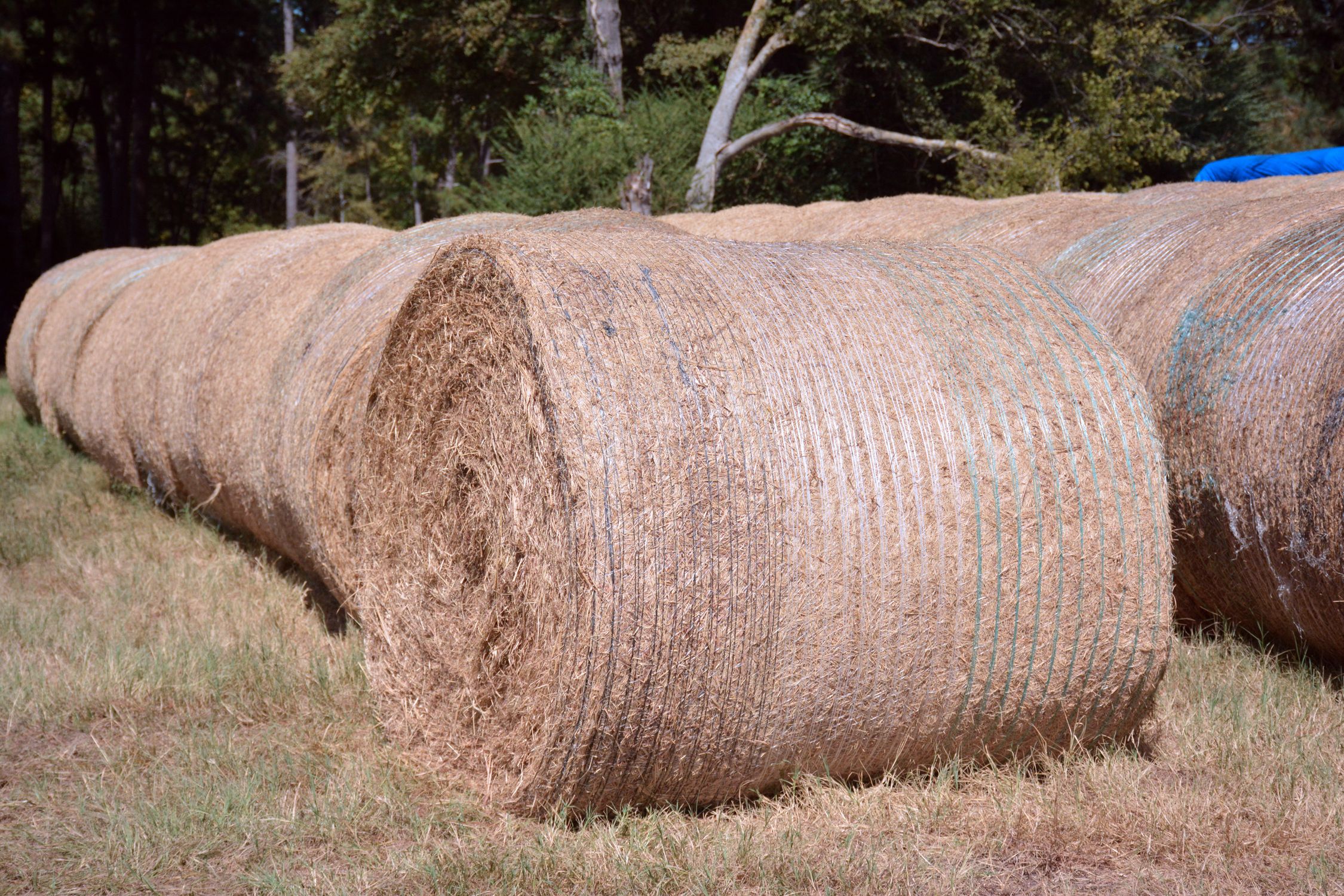
Hay production is an excellent option for smaller to mid-sized properties. Bell County's improved coastal bermudagrass pastures can produce high yields when properly managed. The regional standard requires a minimum of two cuttings per year with at least 3,000 pounds per acre per cutting. The hay must be fertilized at least once each spring, and the fertilizer receipts should be kept as documentation.
A critical point from Bell CAD guidance is that cutting and baling of unmanaged vegetation does not qualify as hay production. You must actively manage the pasture with fertilization, weed control, and proper cutting schedules. The product must be marketable, either sold commercially or fed to your own livestock on the property.
What About Timber and Wildlife Management?
Timber production does not qualify as an agricultural use in Bell County. The BCAD 1-d-1 application instructions explicitly tell applicants to skip the timber section. Bell County sits outside the East Texas Piney Woods belt, and the county has determined that timber production does not meet the degree of intensity standards for special valuation. Any website or broker suggesting otherwise is incorrect.
Wildlife management can qualify as an agricultural use in Bell County, but only as a conversion from an existing 1-d-1 valuation. The land must have been actively enrolled in agricultural valuation in the year immediately before the wildlife conversion. You cannot start wildlife management on raw land that has no prior agricultural use history.
To qualify for wildlife management use, the owner must actively manage the property for native wildlife using at least three of seven qualifying practices: habitat control, erosion control, predator control, supplemental water, supplemental food, shelters, or census counts. Because Bell County sits in the Blackland Prairie and Cross Timbers ecoregions, the Texas Comptroller's recommended minimum acreage for wildlife management is approximately 12.5 to 16.7 acres. A written wildlife management plan on Texas Parks and Wildlife Department form PWD-885 is required. You should verify the specific acreage minimum with Bell CAD, as the chief appraiser sets the local figure.
The Bell County Rollback Penalty
Understanding the rollback tax is essential for any Bell County landowner with 1-d-1 valuation. The rollback is the difference between the taxes paid at agricultural productivity value and the taxes that would have been paid at full market value, recaptured for a period of years.
Two pieces of legislation have significantly changed the rollback calculation. HB 1743, passed in 2019, reduced the 1-d-1 rollback lookback period from 5 years to 3 years. HB 3833, effective June 15, 2021, eliminated the 5 percent annual interest that previously applied to rollback taxes. Under current law, a change of use triggers a rollback of 3 years of back taxes with no pre-delinquency interest.
A change of use means the land is no longer devoted principally to agricultural production. Selling the land alone does not trigger the rollback. If you sell to a buyer who continues qualifying agricultural use, the 1-d-1 valuation carries over and no rollback is owed. The rollback only applies when an actual change of use occurs, such as converting the land to residential development or commercial use.
HB 1244, effective January 1, 2026, added an important protection. Ownership transfer to a new owner who continues running materially the same operation with the same individuals is no longer treated as a change of use. A one-year late-filing window applies for the new owner to update the application. This is particularly relevant for Bell County landowners transferring property to family members or business partners.
How to Apply for a Bell County Ag Exemption
The application process for a Bell County ag exemption starts with Form 50-129, the Application for 1-d-1 (Open-Space) Agricultural Use Appraisal. This form is available on the Bell CAD website at bellcad.org or at their office. The deadline is April 30 of the current tax year.
Bell CAD accepts late filings after April 30, but a 10 percent penalty applies on the tax savings for that year. Late applications are accepted until the appraisal review board approves the records, typically around mid-July. It is far better to file on time and avoid the penalty.
For new applicants, Bell CAD may require a site visit to verify the agricultural use. The field inspector will evaluate the property for evidence of qualifying activity: livestock, fencing, working water sources, crop rows, hay equipment, bee hives, and any other indicators of active agricultural use. Appraisal district representatives recommend having your property in visibly active agricultural condition before the inspection.
After your application is approved, Bell CAD does not require annual reapplication unless the ownership or use changes. However, they may periodically request an updated application to verify that the land remains in qualifying agricultural use. Responding to these requests promptly is important to maintain your valuation.
Bell CAD is located at 411 E Central Avenue in Belton, Texas 76513. You can reach them by phone at (254) 939-5841 or visit their website at bellcad.org. The office is open during regular business hours and staff can answer questions about specific intensity standards, application requirements, and filing deadlines for your property.
Sources
This reflects Texas law as of August 2026, including HB 1743 (86th Legislature, effective September 1, 2019), which cut the open-space rollback from five years to three, and HB 3833 (87th Legislature, effective June 15, 2021), which removed rollback interest entirely.
- Texas Tax Code Section 23.51 - qualified open-space land, degree of intensity, and the 5 to 20 acre beekeeping band
- Texas Tax Code Section 23.54 - application requirements; the statute says "before May 1," which makes April 30 the last valid day
- Texas Tax Code Section 23.55 - additional tax on change of use, three preceding years, no interest
- HB 1743 (86th Legislature) and HB 3833 (87th Legislature)
- Manual for the Appraisal of Agricultural Land - the Comptroller's appraisal methodology
- Form 50-129 - the 1-d-1 open-space application
Verified August 6, 2026. The statutory rules above are statewide. Minimum acreage, hive schedules, stocking rates, and productivity values are local standards set by Bell CAD and change year to year, so confirm current figures with the district before filing.