Texas Ag Exemption Requirements: What Your County Actually Looks For
To qualify for the Texas ag exemption, your land needs a 5-of-7 year use history, sufficient acreage, and an operation that meets your county's intensity standard. Here's what each means.
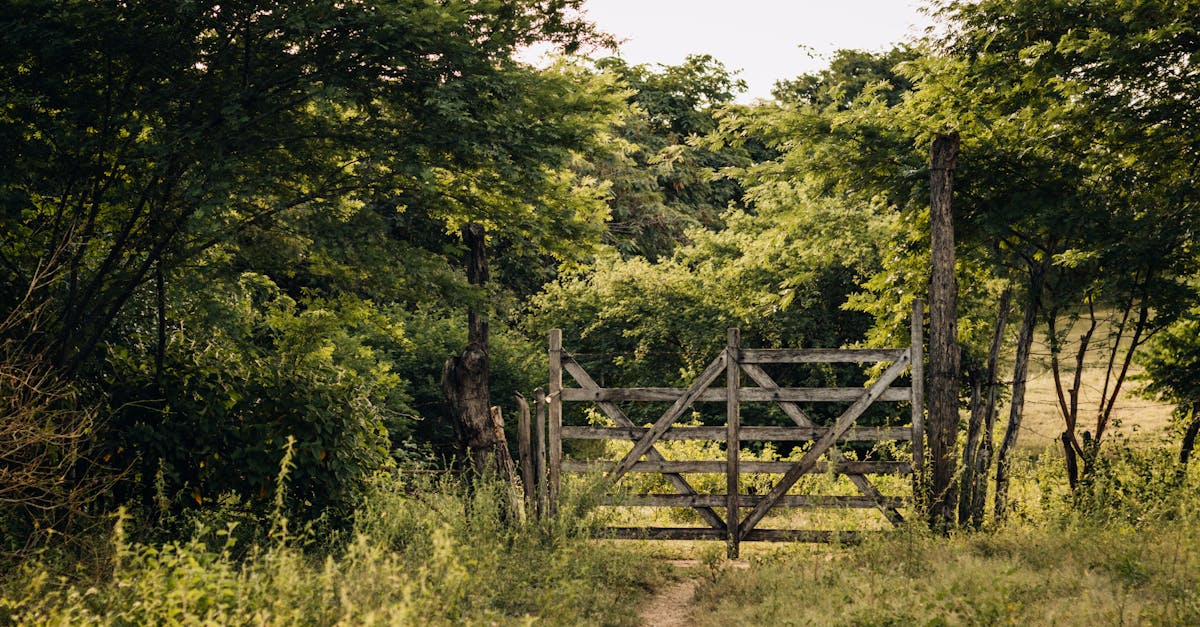
The Texas ag exemption has three core requirements: a history of agricultural use spanning 5 of the last 7 years, sufficient acreage as determined by your county, and an operation that meets your county's intensity standard. You have to satisfy all three. Clearing two out of three is not enough.
Understanding what each requirement actually means in practice, not just what it says on paper, is the difference between a successful application and a denial.
Requirement 1: History of Agricultural Use
Your land must have been devoted principally to agricultural use for 5 of the preceding 7 years. This is measured from the date you file your application, not from when you purchased the property.
"Devoted principally" means agriculture was the land's primary use during those years. Part-time or seasonal use can count if agriculture was genuinely the dominant activity. Fallow periods where land was resting between crop cycles or during drought can count. Complete idleness does not.
Previous Owner's History Transfers to You
This is the most important nuance of the history requirement for buyers. If the land was under agricultural appraisal when you purchased it, the previous owner's qualifying use history transfers to you at the time of sale. You do not restart the clock.
This means a property that has had continuous ag valuation for years can qualify immediately under new ownership, as long as you continue the agricultural use. Appraisal districts will ask for the prior agricultural history when you apply, and a clean transfer of existing ag valuation is the strongest possible starting position.
What Counts as a Break in History
A break in agricultural use resets the clock for the period of the break. If land sat idle for three years, those three years do not count toward the 5-of-7 requirement; the idle years count against you.
However, the 7-year window is rolling. If your land was used agriculturally for 5 of the last 7 years with two idle years mixed in, those two idle years do not disqualify you as long as 5 of the 7 years show genuine agricultural use. You are not required to show 5 consecutive years.
The appraisal district will ask you to document what happened on the land during the history period. Be prepared to explain idle years, transitions between agricultural uses, and ownership changes.
New Land Development: The Waiting Problem
If you purchased bare, unimproved land that has no agricultural history. a tract that was previously part of a residential development, a piece that was carved out of a larger commercial parcel, or raw land that has sat unused for years. you need to build the history. You must operate the land agriculturally and wait until you have 5 years in the rolling 7-year window before you qualify.
This is why buyers negotiating for land actively look for existing ag exemptions. An established exemption is a significant asset because it eliminates the waiting period.
Requirement 2: Acreage
There is no statewide minimum acreage for the Texas ag exemption. This confuses people who search for a single number, and it leads to incorrect assumptions in both directions. some landowners give up on qualifying because they think their 8-acre tract is too small, while others assume any acreage qualifies regardless of county standards.
Each county appraisal district sets its own acreage standards based on what typical agricultural operations in that county look like. The range across Texas is roughly 5 to 20 acres for most livestock uses, but some counties in rural West Texas have even lower minimums, and some suburban counties have higher informal expectations.
A few patterns hold generally:
Rural counties with low land values tend to have lower acreage minimums because small-tract agricultural operations are common and economically viable.
Suburban and exurban counties, counties experiencing growth pressure from metropolitan areas, tend to apply more scrutiny to small tracts because the land is more valuable, the operations are harder to sustain on small acreage, and the tax benefit is proportionally larger.
The use affects the minimum. Beekeeping commonly qualifies on smaller tracts than cattle, because fewer acres are needed to support a qualifying number of hives. Crop production requirements vary by crop type. Check the requirements for your specific intended use, not just a general acreage number for the county.
See how much acreage you need by county for the specific standards your county appraisal district applies, broken down by use type.
Requirement 3: Intensity Standard
The intensity standard is where most good-faith applications fail. The Texas Tax Code requires that your land be used for agriculture "to the degree of intensity generally accepted in the area." That phrase is doing a lot of work.
What it means practically: your operation should look like what genuine agricultural producers in your county are doing. If the typical cattle operation in your county runs one animal unit per 10 acres, you need to be at or near that ratio. If your county's beekeeping standard is 6 hives for the first 5 acres, you need 6 managed hives.
What "Degree and Intensity" Looks Like in Practice
Appraisal districts are evaluating several things when they consider intensity:
Stocking rates for livestock. The number of animals relative to your acreage compared to what is typical for your county's terrain and vegetation. Running 2 goats on 30 acres when the county standard is 1 animal unit per 5 acres fails this test.
Infrastructure. Working fences in reasonable repair, adequate water sources for the animals, and storage for feed and equipment. A pasture with no visible infrastructure does not look like an active agricultural operation.
Management practices. Are you doing the things a working agricultural producer does? Feeding supplementally during dry periods, maintaining hives, rotating grazing, treating sick animals, harvesting crops. The appraisal district is looking for active management, not passive land-holding with a few animals on it.
Production evidence. Sales receipts, lease agreements, records of hay or crop sales, honey production records. You do not have to show a profit, but some evidence that the operation is producing something adds credibility.
Intensity Is Not the Same as Profitability
This distinction matters. An operation can run at a loss and still meet the intensity standard. Many qualifying operations do, particularly in drought years or when input costs are high. The question is not whether you are making money, but whether you are operating the land the way a real agricultural producer would.
What fails the intensity test is not a losing operation; it is an inadequate one. Too few animals for the acreage, fencing in disrepair, no evidence of active management, and a landowner who cannot describe what their agricultural operation involves. Those are signs the appraisal district reads as a recreational or speculative use disguised as agriculture.
Documentation: What to Keep
You are not required to submit documentation when you apply, but you need to have it ready. Appraisal districts can request documentation at any time, they perform field inspections on some properties, and if you are ever denied or face a review, your records will be your case.
Keep the following on an ongoing basis:
Financial records. Receipts for feed, seed, equipment, veterinary care, and other agricultural inputs. Sales records for livestock, crops, hay, or honey. These do not need to show a profit; they need to show activity.
Photographs. Dated photos of your animals, crops, hives, or other qualifying use throughout the year. A folder of timestamped photos from different seasons shows active management over time and counters any claims that the operation is seasonal or superficial.
Lease agreements. If you lease your land to another producer under a grazing, farming, or hunting lease, keep the written agreement and records of any payments. Agricultural leases are a legitimate qualifying use and sometimes the most practical option for landowners who do not personally operate the land.
Vet records and brand registrations. For livestock operations, veterinary invoices and cattle brand registration documents demonstrate a legitimate operation.
Hive inspection records. For beekeeping, records of your hive inspections and production help demonstrate active management to meet the beekeeping intensity standard.
Common Disqualifiers
Hobby use. The operation looks recreational rather than agricultural. Keeping animals for personal enjoyment without a commercial intent is the most common reason appraisal districts deny or revoke ag valuation on small tracts.
Idle land. The land has not been used for agriculture during the history period, or is currently not in active agricultural use at the time of application.
Residential-primary properties. If the primary use of the property is clearly residential, a large home with extensive landscaping, a pool, guest houses, and minimal agricultural infrastructure, the agricultural component may not be seen as the principal use even if livestock are present.
Transitional land. Land that has been recently subdivided, is actively being marketed for development, or is clearly held for future non-agricultural use may not qualify even if some agricultural activity continues.
County Variation: Why Travis and Williamson Differ
Two neighboring counties can have meaningfully different standards, and this is by design. Texas law gives each county appraisal district discretion to set intensity and acreage standards appropriate for local conditions.
Travis County (Austin) and Williamson County (Georgetown/Round Rock) are both in Central Texas with similar terrain, but their positions relative to urban development and land values have led to different application of the intensity standards. Appraisal districts in high-growth counties tend to scrutinize applications more carefully and apply the intensity standard more rigorously than rural counties where agricultural use is simply the norm.
If you are in a county that borders a major metropolitan area, expect a higher bar. Look up your specific county's standards using our county lookup tool before assuming the state baseline applies.
How These Requirements Connect to the Application
Once you understand the three requirements, the application process is more straightforward. The form, Form 1-D-1, asks you to document the history, describe the current agricultural use, and certify that the operation meets the requirements. Our step-by-step application guide walks through each section and what to prepare.
Before you file, it is worth understanding the full range of qualifying agricultural uses, particularly if you are still deciding what to do with your land. The complete list of qualifying animals and uses may open options you had not considered.
And if you are comparing the ag exemption to other valuation options like wildlife management, the wildlife vs. ag exemption comparison covers which makes more sense depending on your land type and goals.
One more thing to understand before you commit: if you ever change the land's use and lose the exemption, a rollback tax applies. Read about how the rollback penalty works so you know your exposure before you make any decisions about the property.
To understand the full concept, including how the valuation affects your tax bill with a real dollar example, see our overview of what the ag exemption is and how it works.