Which Animals Qualify for the Texas Ag Exemption? The Complete List
Cattle, goats, sheep, bees, horses, poultry, and certain exotics can qualify for the Texas ag exemption if the operation meets intensity standards.
The short answer: cattle, goats, sheep, horses used for ranch work or breeding, poultry raised commercially, bees, and certain exotic livestock can all qualify for the Texas ag exemption. But the list of qualifying species is only half the question. What the county appraisal district actually evaluates is whether your operation runs at the degree and intensity typical for agriculture in your area. A qualifying animal kept at hobby-farm scale does not qualify.
Here is what you need to know about each category.
Cattle
Cattle are the most common qualifying use in Texas, and most counties have well-established stocking rate standards for them. Stocking rates vary significantly based on rainfall, soil type, and vegetation. In East Texas where rainfall is higher and grass grows more densely, you might be able to run one animal unit per 5 acres. In the dry Hill Country or West Texas, the same standard might be one animal unit per 20 to 30 acres.
An "animal unit" in appraisal district terms is typically one mature cow or bull. Calves and yearlings are counted at a fraction of a unit depending on their weight.
What disqualifies a cattle operation: running fewer animals than the county stocking rate requires, using the land primarily for recreational purposes with cattle as a secondary presence, or failing to maintain fencing and water infrastructure consistent with a working operation.
Check your county's specific stocking rate requirements at our county lookup tool before planning your operation.
Goats and Sheep
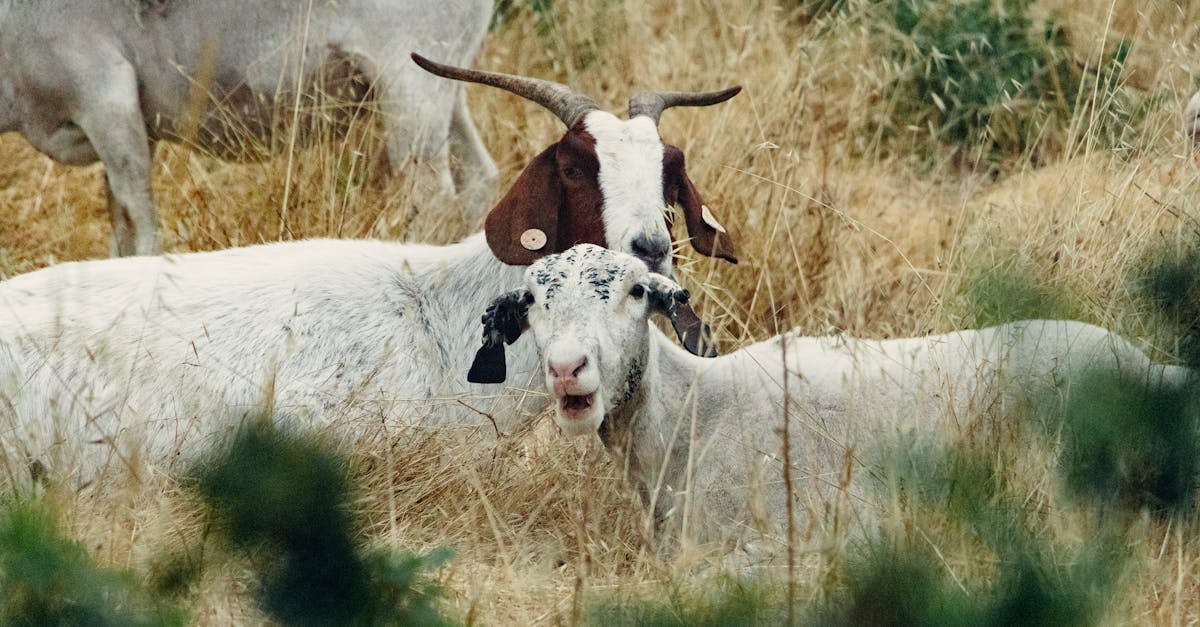
Goats and sheep qualify under the same livestock framework as cattle. They are particularly practical on rocky, brushy, or rough terrain where cattle are less effective grazers. Many landowners in the Hill Country and Trans-Pecos regions use goats or sheep specifically because they are better suited to the landscape.
The intensity standard applies the same way. You need enough animals on your acreage to meet the county's expectations for a genuine operation. Appraisal districts typically express this as a number of animal units per acre, and goats and sheep are counted at lower animal unit equivalents than cattle, usually around 5 to 7 goats per animal unit.
Angora goats (raised for mohair), meat goats raised for commercial sale, and sheep raised for wool or meat all qualify. Pets kept in a pasture do not.
Horses
Horses qualify, but the use matters. The two situations that qualify are:
Breeding operations. If you maintain mares and a stallion for the purpose of producing and selling foals, that is an agricultural use. The breeding must be conducted as a commercial enterprise, not as a side activity of a recreational horse operation.
Ranch work and working livestock. Horses used to manage cattle or other livestock, working ranch horses, qualify as part of a larger livestock operation. In this case, the horses support a qualifying use rather than being the qualifying use themselves.
What does not qualify: horses kept for recreational riding, trail horses, show horses used for competition, and horses boarded for other people without a breeding or working livestock component. The appraisal district will look at whether the equine use could reasonably be called agricultural production. A boarding stable that also keeps one breeding mare is unlikely to qualify on the strength of that single mare.
Poultry
Commercial poultry operations, laying hens, broilers, turkeys raised for sale, qualify for ag valuation. The key word is commercial. The operation has to be oriented toward producing and selling poultry or eggs, not simply supplying eggs for a household.
Backyard chicken flocks of 10 or 20 birds for personal use do not qualify. A flock of several hundred laying hens with commercial egg sales, or a broiler operation under contract with a processor, clearly does. Operations in the middle need to demonstrate they are producing at a scale consistent with commercial intent, which typically means sales records and a real market for the product.
Bees
Beekeeping is one of the most accessible qualifying uses for smaller tracts. Texas extended agricultural appraisal to beekeeping under Section 23.51 of the Tax Code in 2012, and a meaningful number of suburban and semi-rural landowners have used it to qualify properties as small as 5 to 10 acres in certain counties.
The number of hives required depends on your acreage. The Texas Comptroller has established a sliding scale: a minimum of 6 hives for the first 5 acres, with additional hives required as acreage increases, up to 20 hives for 21 or more acres. Individual counties can set higher requirements, so confirm your county's standards before committing.
The bees must be managed, not just present. Appraisal districts look for evidence of active colony management: hive inspections, swarm management, honey production, or participation in pollination services. An abandoned set of hive boxes does not qualify.
See our beekeeping exemption guide for detailed hive count requirements by acreage, and our post on how many hives you need by county for county-specific information.
Exotic Livestock
Exotic livestock can qualify for ag valuation when raised for commercial production. Texas has a large exotic ranching industry, particularly in the Hill Country, and the appraisal framework recognizes it.
Species that commonly qualify:
Axis deer and fallow deer. These are raised commercially on fenced ranches for venison and hunting. If the operation generates income from meat sales, hunting leases, or breeding stock, it has a strong case for ag valuation.
Blackbuck antelope. Same commercial production rationale as axis deer.
Emu and ostrich. Raised for meat, oil, eggs, and feathers. These operations were more common in the 1990s, but active commercial producers still exist and can qualify.
Bison. Bison raised for commercial meat production qualify the same way cattle do, and stocking rates are typically evaluated similarly to cattle.
What does not qualify: exotic animals kept as pets or curiosities, trophy animals maintained purely for personal enjoyment without a commercial production component, and operations that lack the infrastructure and records of a real enterprise.
The documentation burden is higher for exotic operations than for standard livestock. You will want sales records, invoices, hunting lease agreements, or other written evidence of commercial activity.
The Intensity Standard: What "Enough Animals" Actually Means
Every animal category above is subject to the same underlying test: is your operation conducted at the degree and intensity typical for agriculture in your area?
Appraisal districts evaluate this by comparing your operation to what other genuine agricultural producers in the county are doing. They look at stocking rates, acreage use, infrastructure (fencing, water, feed storage), records of production and sale, and in some cases whether the operation is generating any income.
The intent is to distinguish between someone using land for genuine agricultural production and someone using agricultural valuation to reduce taxes on land that is primarily serving another purpose: a country home, a retreat property, or speculative land held for future development.
This does not mean your operation has to be profitable. Many qualifying operations run at a loss in lean years. But it does need to look and function like a real agricultural enterprise, not a minimum-effort arrangement designed to check a box.
For a detailed explanation of how intensity standards are applied, see our Texas ag exemption requirements guide.
Wildlife Management as an Alternative
If your land has existing agricultural valuation and you want to transition to a use that does not fit the livestock or crop framework, or if native wildlife management simply fits your land better than running cattle, the wildlife management valuation is worth considering.
Wildlife management valuation keeps your land under the 1-d-1 agricultural appraisal but replaces the agricultural use requirement with a set of qualifying wildlife management practices: habitat management, census activities, predator management, or supplemental water and food. It requires that your land was already under ag or timber valuation, so it is a conversion rather than a new application.
Read more about how the two valuations compare in our wildlife management vs. ag exemption breakdown, or see the wildlife management valuation guide for the full qualification requirements.
Applying for Ag Valuation
Once you have identified the qualifying use that fits your land, the next step is filing Form 1-D-1 with your county appraisal district by April 30. Our step-by-step application guide covers every section of the form, what documentation to prepare, and what to expect after you file.
Before you apply, check our county lookup to confirm your county's specific acreage and intensity standards for the animal use you are planning. The variation between counties is significant, and knowing your county's benchmarks in advance will help you structure your operation to qualify from the start.
You can also get a sense of what your tax savings could look like by running your numbers through our savings estimator.