Texas Solar and Wind Property Tax Exemption: Your Guide to Form 50-123
Texas Tax Code 11.27 exempts solar panels and wind turbines from property tax. How to file Form 50-123, what qualifies, and interaction with ag exemptions.
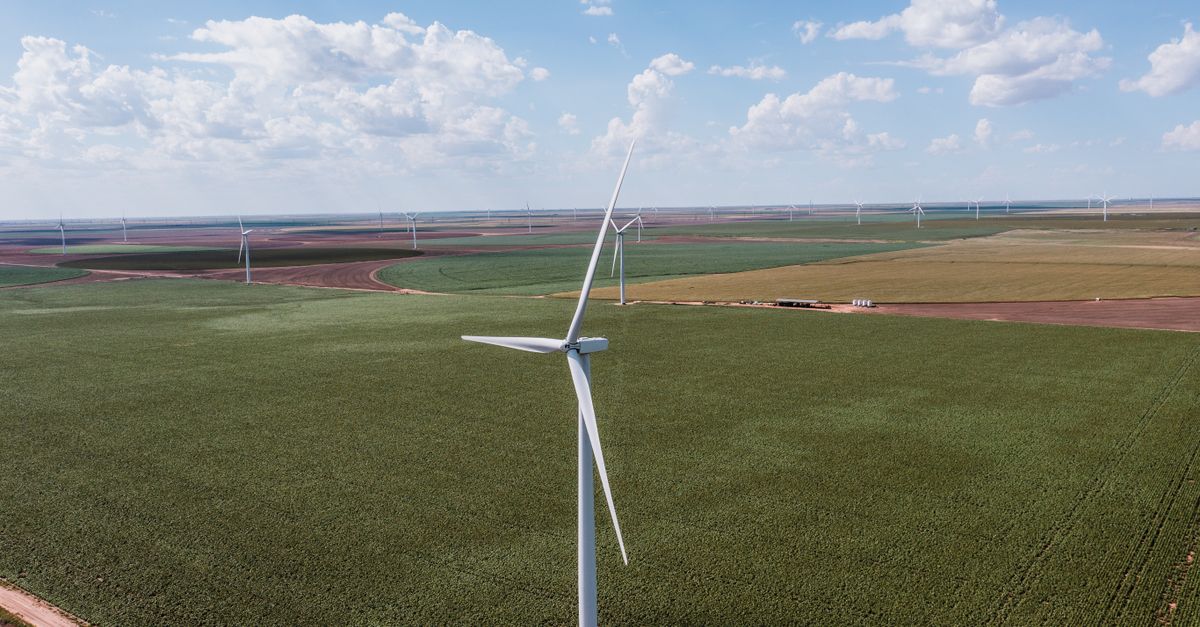
If you install solar panels or a wind turbine on your Texas property, the added value from that equipment is 100 percent exempt from property tax. You do not pay a dime of property tax on the increased appraised value those devices create. This exemption comes from Texas Tax Code Section 11.27, and it applies regardless of whether your land already has an agricultural valuation, a homestead exemption, or any other tax benefit.
The key form is Form 50-123, a one-page application you file with your county appraisal district. Once approved, the exemption stays in place as long as the equipment remains installed and operational. This guide covers what qualifies, how to apply, and several situations most online guides skip, including how the exemption interacts with an existing ag valuation and what the "on-site use" rule means for landowners who sell power back to the grid.
What is the Texas solar and wind energy device exemption?
Texas Tax Code Section 11.27 grants a 100 percent property tax exemption on the appraised value attributable to a solar or wind-powered energy device. In plain language: if your county appraisal district says your solar array adds $40,000 to your property's value, that $40,000 is exempt. You are taxed as if the equipment is not there.
This is not a partial exemption. It is a full exemption on the device's contribution to appraised value. The land itself and any other improvements continue to be taxed normally, but the renewable energy equipment is completely removed from your taxable value.
INFO
The exemption applies to the equipment's value, not the land beneath it. If you install solar panels on a 10-acre pasture, the pasture's agricultural valuation is unaffected. The panels themselves and any associated support structures are what get the 100 percent exemption.
The exemption covers three categories of devices under the statute: solar, wind, and biomass. Biomass devices are less common for individual landowners and typically involve anaerobic digesters or similar equipment. For most Texas landowners, the solar and wind provisions are the relevant parts.
What qualifies as a solar or wind-powered energy device?
The statute defines a qualifying device as one that uses solar or wind energy primarily for the production and distribution of energy for on-site use. Several important details flow from this definition.
Solar devices include photovoltaic panels that generate electricity, as well as solar thermal systems that heat water or air. Rooftop residential arrays qualify. Ground-mounted arrays on agricultural land qualify. Solar-powered water pumps for livestock qualify. The key requirement is that the device converts sunlight into usable energy.
Wind devices include wind turbines that generate electricity. Small turbines that power a single building or operation qualify, as do larger turbines. Traditional windmills used for pumping water also qualify, which is an important and often overlooked point for ranchers and farmers.
What does not qualify: passive solar design features like south-facing windows or thermal mass walls. These are building design choices, not devices. Solar pool heaters that are not part of a broader energy system may also fall outside the exemption depending on how the local appraisal district interprets the statute.
WARNING
The device must be "primarily for production and distribution of energy for on-site use." If you build a commercial solar farm and sell 90 percent of the electricity to the grid, your local appraisal district may challenge the exemption. The on-site use requirement is the most common point of dispute.
How do I apply for the exemption?
You apply by filing Form 50-123 with your county appraisal district. The form is available on the Texas Comptroller's website and through most appraisal district offices. It is a straightforward one-page document.
The form asks for:
- Property owner information and property identification
- Description of the device (solar, wind, or biomass)
- Installation date
- The appraised value attributable to the device
- Manufacturer and model information
- A statement certifying the device is primarily for on-site use
You file the form after the device is installed and operational. There is no annual renewal requirement. Once approved, the exemption remains in place as long as the device continues to function and the property ownership does not change.
The deadline for filing is the same as other exemption applications: April 30 of the tax year for which you are seeking the exemption. However, if you install equipment mid-year, you can file for the following tax year. Contact your appraisal district for their specific processing timeline. Each CAD operates on its own schedule, and some process exemption applications year-round while others have strict cutoff dates.
Can I have a solar exemption and an ag exemption on the same land?
Yes. These two exemptions address different things and do not conflict.
Your agricultural valuation, also called a 1-d-1 appraisal, values your land based on its agricultural productivity rather than its market value. It applies to the land itself. The solar or wind exemption applies to the value added by the renewable energy equipment installed on that land.
In practice, here is how the appraisal math works on a property with both exemptions:
- The land is appraised at its agricultural productivity value, just as it was before the solar panels were installed.
- The solar panels are appraised at their contribution to market value, say $35,000.
- That $35,000 is fully exempted under Tax Code 11.27.
- Your total taxable value is the ag-use value of the land, plus any non-exempt improvements like a house or barn.
The exemptions stack without conflict. The ag exemption reduces the land value. The solar exemption eliminates the equipment value. Neither cancels the other.
NOTE
If you have an existing ag exemption and are considering solar panels, installing them does not jeopardize your agricultural valuation. The land continues to qualify based on its agricultural use. The panels occupy a small footprint and do not change the land's primary use classification.
There is one nuance worth understanding: if you convert a substantial portion of agricultural land to a solar installation, you could trigger a rollback on the converted acreage. This is rare for landowner-scale installations, which typically use less than an acre of panel footprint. But if you are planning a large ground-mounted array covering multiple acres, talk to your appraisal district about how the land under the panels will be classified. The panels themselves are exempt, but the land classification may change if agricultural use ceases on that specific acreage.
What does "primarily for on-site use" actually mean?
This is the most contested phrase in the statute. Tax Code 11.27 says the device must be "primarily for production and distribution of energy for on-site use." The word "primarily" is doing a lot of work here.
Most Texas landowners with solar panels use the vast majority of their generated electricity on-site, on their own property, to power their home, barn, workshop, irrigation pumps, or other equipment. Some net metering occurs when excess power flows back to the grid, but the primary purpose remains on-site consumption.
If you participate in a net metering program with your electric utility and occasionally send surplus power to the grid, that does not disqualify you. The exemption does not require 100 percent on-site use. It requires that on-site use is the primary purpose.
The Comptroller's guidance on this point is practical rather than punitive. The exemption is designed for landowners who install equipment to reduce their own energy costs, not for commercial power generation operations. If your solar array powers your own property and occasionally exports surplus, you are within the intent of the statute.
Where the line gets drawn is at the commercial threshold. If you lease your land to a solar developer who builds a utility-scale array and sells all the power to the grid, that is not an on-site use scenario. The developer may have other tax arrangements, but the landowner's 11.27 exemption would not apply because the energy is not used on-site.
What about windmills for agricultural water pumping?
Traditional windmills used for pumping water to livestock or irrigation qualify under Tax Code 11.27. This is an important point that most solar-focused exemption guides miss entirely.
A windmill that mechanically pumps water from a well to a stock tank is a wind-powered energy device. It converts wind energy into mechanical energy for on-site agricultural use. The exemption applies to the added value from the windmill and its associated equipment: the tower, the pump mechanism, the storage tank if it is part of the system.
This is distinct from a wind turbine that generates electricity. Both qualify. The statute covers wind-powered energy devices broadly, without restricting the exemption to electrical generation only.
For ranchers and farmers, this means the windmill that has been on the property for decades may qualify for an exemption on any appraised value it adds. The exemption is not limited to new or high-tech installations. A traditional Aermotor windmill pumping water for cattle is a qualifying device under the same statute that covers modern solar arrays.
INFO
The biomass provision in Section 11.27 also covers anaerobic digesters that convert animal waste into energy. If you operate a dairy, feedlot, or poultry operation and install a digester, the value added by that equipment is exempt. This overlaps with the pollution control exemption under Tax Code 11.31, which can provide additional tax benefits for certain equipment. Talk to a property tax consultant if you are evaluating a digester project.
How does the exemption affect your property tax bill?
The exemption works by reducing your appraised value, which in turn reduces your tax bill. The math is straightforward.
Your county appraisal district determines two things: your property's total market value, and the portion of that value attributable to the solar or wind device. The device value is subtracted from your taxable value. You are then taxed on the remaining amount.
For example, if your property has a market value of $400,000 and the appraisal district determines your solar array contributes $30,000 to that value, your taxable value becomes $370,000. At a typical Texas property tax rate of 1.8 percent, that $30,000 exemption saves you $540 per year in property taxes.
The savings compound over time because the exemption is permanent as long as the device operates. Over a 25-year lifespan of a solar array, the cumulative tax savings can exceed $13,000 at current tax rates.
The exemption does not reduce your tax rate. It reduces your taxable value. Your school district, county, and other taxing entities still apply their full rates, but they apply them to a smaller number. This exemption is one of several Texas property tax exemptions available to landowners.
Do I need to refile every year?
No. Once your Form 50-123 is approved, the exemption stays in place automatically. You do not file an annual renewal.
The exemption remains valid as long as three conditions hold: the device continues to operate, the property ownership does not change, and the device remains primarily for on-site use.
If you sell the property, the new owner must file their own Form 50-123 to continue the exemption. The exemption does not transfer automatically with the deed. If you remove the equipment, the exemption terminates because there is no longer a qualifying device. If you upgrade or expand your system, you should contact your appraisal district to determine whether a new or amended application is needed. In most cases, an expansion means the added value from the new equipment qualifies for the exemption, but the appraisal district needs to document the change.
County-by-county differences in processing
Texas has 254 county appraisal districts, and they do not all handle Form 50-123 the same way. The law is uniform statewide, but local administrative practices vary.
Some districts process the form quickly with minimal documentation. Others may request additional information: manufacturer specifications, installation invoices, photographs of the installed equipment, or a copy of your interconnection agreement with the electric utility. These requests are administrative, not statutory. The district has the right to verify that the device exists and qualifies, but it cannot impose additional eligibility requirements beyond what the statute specifies.
The safest approach is to contact your appraisal district before filing. Find your county on our Texas county appraisal district directory to get the right contact information. Ask what documentation they require with Form 50-123. Bring the completed form, your installation invoice, and a photo of the equipment. Being prepared with documentation avoids delays.
If your appraisal district denies the exemption, you have the right to protest the decision through the standard Appraisal Review Board process. Learn more in our guide to how to protest your property tax appraisal in Texas. The denial must be in writing, and you have 30 days from the date of the denial notice to file a protest. The grounds for protest are that the device qualifies under Section 11.27 and that the district's denial was improper.
How the exemption interacts with a homestead exemption
If you have a homestead exemption on your residence and install solar panels on your roof, the two exemptions work together without overlap.
The homestead exemption reduces your taxable value by a fixed dollar amount: $140,000 for school district taxes for most homeowners, following the increase under Senate Bill 4 in 2025. The solar exemption then removes the added value from the panels on top of that. They address different parts of your tax bill.
Here is how the math layers:
- Your home's market value (without solar): $300,000
- Value added by solar panels: $20,000
- Total market value: $320,000
- Minus homestead exemption: $140,000 (school taxes only)
- Minus solar exemption: $20,000
- Taxable value for school taxes: $160,000
The exemptions apply sequentially and independently. Having one does not reduce or eliminate the other.
Where to go next
The solar and wind energy device exemption is one of the most straightforward property tax benefits available to Texas landowners. The form is a single page. The exemption is 100 percent. It does not conflict with your ag exemption or homestead exemption. And it never expires as long as the equipment operates.
If you are evaluating whether to install solar or wind equipment, contact your county appraisal district early in the process. Confirm their documentation requirements and processing timeline. Get the exemption filed as soon as the equipment is operational.
For more on Texas property tax exemptions for landowners, read our complete guide to how to get an ag exemption in Texas or compare open-space valuation vs. agricultural valuation to understand the difference. If you are considering land-use changes for conservation purposes, our conservation easement guide explains the federal tax deduction available through permanent land protection.
The Texas Comptroller's office publishes Form 50-123 and the full text of Tax Code Section 11.27 online. Your county appraisal district website also has local filing instructions and contact information.
Sources
Exemption amounts in this guide reflect Texas law as of August 2026. The residence homestead figure includes the increase made by Senate Bill 4 (89th Legislature, 2025), which Texas voters approved as Proposition 13 on November 4, 2025.
- Texas Comptroller, Property Tax Exemptions - solar and wind-powered energy device exemption guidelines and current residence homestead amounts
- Texas Tax Code Chapter 11, Taxable Property and Exemptions - Section 11.27 (solar and wind-powered energy devices), Section 11.13 (residence homestead)
- Form 50-123, Exemption Application for Solar or Wind-Powered Energy Devices
- Senate Bill 4, 89th Legislature (2025) - raised the general residence homestead exemption from $100,000 to $140,000
Verified August 6, 2026. Confirm filing procedures with your county appraisal district, since documentation requirements vary by district.