Texas Apiary Inspection Service Registration: What Beekeepers Need to Know
TAIS registration costs $35/year and strengthens your ag exemption application. Here's how to register, what inspectors look for, and why it matters for your property tax.
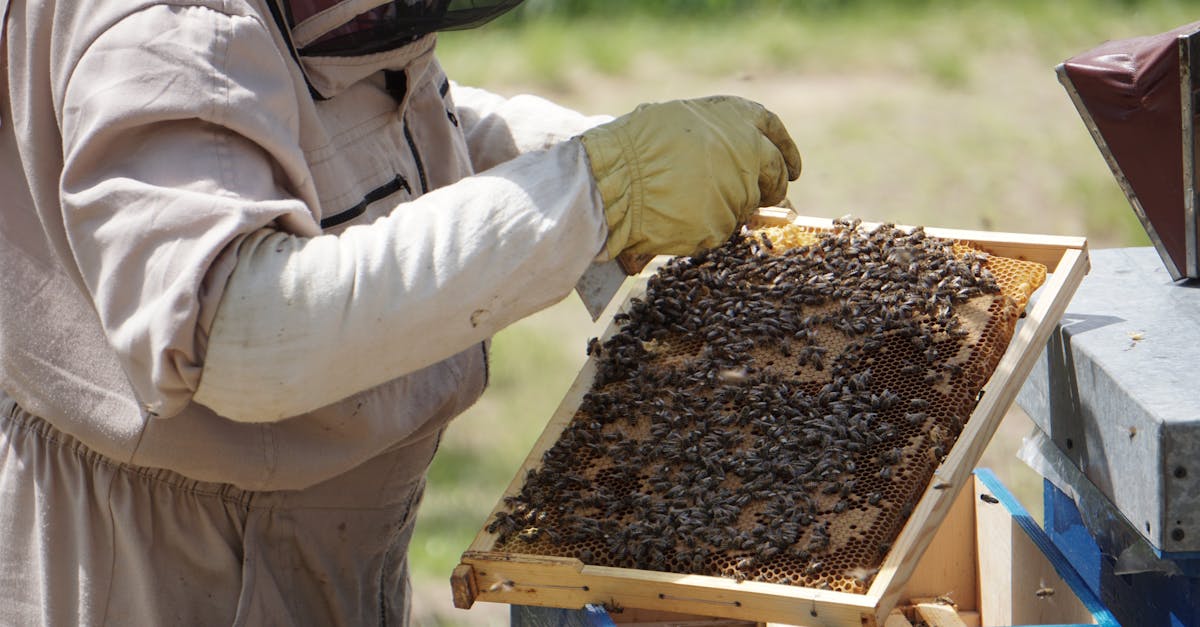
If you keep bees in Texas, or you're setting up hives to qualify for an agricultural exemption, you've probably seen references to the Texas Apiary Inspection Service. Most county appraisal districts mention it in their beekeeping guidelines, and some require proof of registration with your application.
Here's what TAIS actually is, how to register, what it costs, and why it matters for your property tax exemption.
What Is TAIS?
The Texas Apiary Inspection Service is the state agency responsible for regulating the beekeeping industry in Texas. It operates under Texas A&M AgriLife Research, housed within the Entomology Department at the Janice and John G. Thomas Honey Bee Facility in College Station.
TAIS has been around since 1901. Its authority comes from Texas Agriculture Code, Chapter 131 (Bees and Honey), which was substantially overhauled in 2023 by House Bill 4538.
TAIS is not part of the Texas Department of Agriculture or the Texas Animal Health Commission. It's purely a Texas A&M operation.
Is Registration Required?
Technically, no. Texas Agriculture Code Section 131.045 says each beekeeper "may register," not "shall register." It's permissive, not mandatory.
But here's the practical reality: Many county appraisal districts either require or strongly encourage TAIS registration as part of your ag exemption application. Travis County, for example, explicitly requires registration with TAIS. Even in counties that don't formally require it, having a current registration demonstrates that you're running a legitimate operation, not just parking empty boxes on your property.
Registration is required if you:
- Perform bee removals. A current Beekeeper Registration serves as your exemption from structural pest control licensing requirements under Texas Occupations Code Chapter 1951.
- Bring bees into Texas. Interstate movement requires a health certificate and an Interstate Permit ($200).
- Sell bees. Anyone selling queens, packages, colonies, or nuclei must provide either a TAIS health certificate or a notarized affidavit certifying freedom from disease.
How to Register
Registration is done through the TAIS online portal at taispermits.tamu.edu.
You'll need to provide:
- Your name, address, and phone number
- The county (or counties) where your apiary is located
- Approximate dates the apiary will be at each location
- The inspector may also request a map showing exact apiary locations (these are protected as trade secrets under Government Code Chapter 552)
The registration period runs September 1 through August 31. If you're applying for an ag exemption with an April 30 deadline, make sure your registration is current well before you submit your application.
Important change: As of September 1, 2023, "Apiary Registration" was renamed to "Beekeeper Registration" under HB 4538. If you see references to the old apiary registration, they're talking about the same thing.
What Does It Cost?
| Service | Cost | Period |
|---|---|---|
| Beekeeper Registration | $35 | Annual (Sept 1 - Aug 31) |
| Interstate Permit | $200 | Annual (Sept 1 - Aug 31) |
| Apiary Equipment Brand | $10 | One-time |
| Requested Inspection | $100 | Per inspection |
| Queen Breeder Inspection | $300 | Per inspection |
| Bee Removal Statement | Free | Annual (Sept 1 - Aug 31) |
For most landowners pursuing a beekeeping ag exemption, the $35 annual Beekeeper Registration is the only fee you'll need to pay.
What Inspectors Look For
TAIS inspections focus on colony health, not property tax compliance. That's your county appraisal district's job. TAIS inspectors are checking for:
- American Foulbrood (AFB) - the most serious bacterial disease. If confirmed via lab testing, infected hives must be destroyed and the apiary is quarantined for 30 days.
- Reportable pests - Tropilaelaps Mites, Yellow Legged Hornets, and other threats that beekeepers are legally required to report.
- General colony health - inspectors examine brood frames looking for symptoms of disease and pest issues.
Inspections are cooperative, not adversarial. TAIS contacts beekeepers in advance to schedule, and they encourage you to be present so you can ask questions and learn proper management techniques. Inspectors carry their own tools and equipment, so you don't need to prepare anything special.
Commercial and migratory operations receive annual inspections as standard practice. Hobbyist and small-scale operations are inspected less frequently, often only when there's a disease concern in your area or if you request one.
How TAIS Connects to Your Ag Exemption
TAIS registration and your county ag exemption are separate processes run by separate agencies. But they overlap in important ways.
TAIS does not grant ag exemptions. Your county appraisal district handles that through Texas Form 50-129 (Application for 1-d-1 Open-Space Agricultural Use Appraisal). TAIS has no authority over property tax valuation.
But TAIS registration supports your application. According to TAIS, "registration through our office is used to show the existence of bee hives on a property." A current registration is documentation that a real inspector from a real state agency has confirmed your beekeeping operation exists.
When you file your ag exemption application, having your TAIS registration number strengthens your case, especially in counties with stricter documentation requirements. Think of it as $35 worth of credibility.
County-by-county variation matters. Some counties list TAIS registration as a requirement in their beekeeping guidelines. Others treat it as supporting documentation. Check your county's specific requirements before applying.
Hive Identification Requirements
Whether or not you register with TAIS, Texas law requires that your hives be identifiable. Under Chapter 131:
- Hives located away from your primary residence must display clear, permanent identification in 1-inch letters or numbers on each end
- Alternatively, you can post a weatherproof apiary sign with the manager's contact information
- All hives must have movable frames (top-bar hives and Langstroth hives both qualify)
If you do register, TAIS can issue an Apiary Equipment Brand (a unique number in X-XXX-XXX format) for $10 as a one-time fee. This brand becomes your permanent hive identifier.
Recent Changes: HB 4538 (2023)
House Bill 4538, effective September 1, 2023, was the first major overhaul of Texas bee law since 1983. Key changes that affect landowners:
- Beekeeper Registration replaced Apiary Registration. Same concept, new name, new form.
- Interstate permits simplified. One annual permit now covers multiple shipments (previously required per-shipment permits).
- Intrastate shipping permits eliminated entirely.
- Disease reporting strengthened. Beekeepers must immediately report "reportable diseases and pests" to the Chief Apiary Inspector. Failure to report is a Class C misdemeanor (up to $500 fine).
- Hive branding updated. The numbering system expanded from 3 to 7 digits, and marking hives with your name alone is now acceptable (address no longer required).
Pending legislation: HB 552 (2025) would commission a Texas A&M AgriLife Extension study to determine standardized colony density requirements for ad valorem tax appraisal of beekeeping land. If passed, this could eventually replace the current county-by-county approach with uniform statewide standards.
Step-by-Step: Getting Registered
- Go to taispermits.tamu.edu and create an account
- Complete the Beekeeper Registration Application ($35)
- Provide your apiary location details (county, approximate dates, map if requested)
- Save your registration confirmation for your ag exemption application
- File Texas Form 50-129 with your county appraisal district before April 30, including your TAIS registration as supporting documentation
Contact TAIS
- Phone: (979) 321-5827
- Email: tais@ag.tamu.edu
- Website: txbeeinspection.tamu.edu
- Portal: taispermits.tamu.edu
- Address: Texas Apiary Inspection Service, 2475 TAMU, College Station, TX 77843-2475
Next Steps
If you're setting up a beekeeping operation for your ag exemption, TAIS registration should be one of your first steps, right alongside sourcing your bees and setting up your hives. The $35 annual fee is a small cost for the documentation and credibility it provides.
For more on the beekeeping exemption itself, check these guides: