How Much a Conservation Easement Saves on Taxes: Texas Guide
How much can a conservation easement save on taxes in Texas? Covers AGI limits, qualified farmer benefits, deduction math, and stacking with ag exemptions.
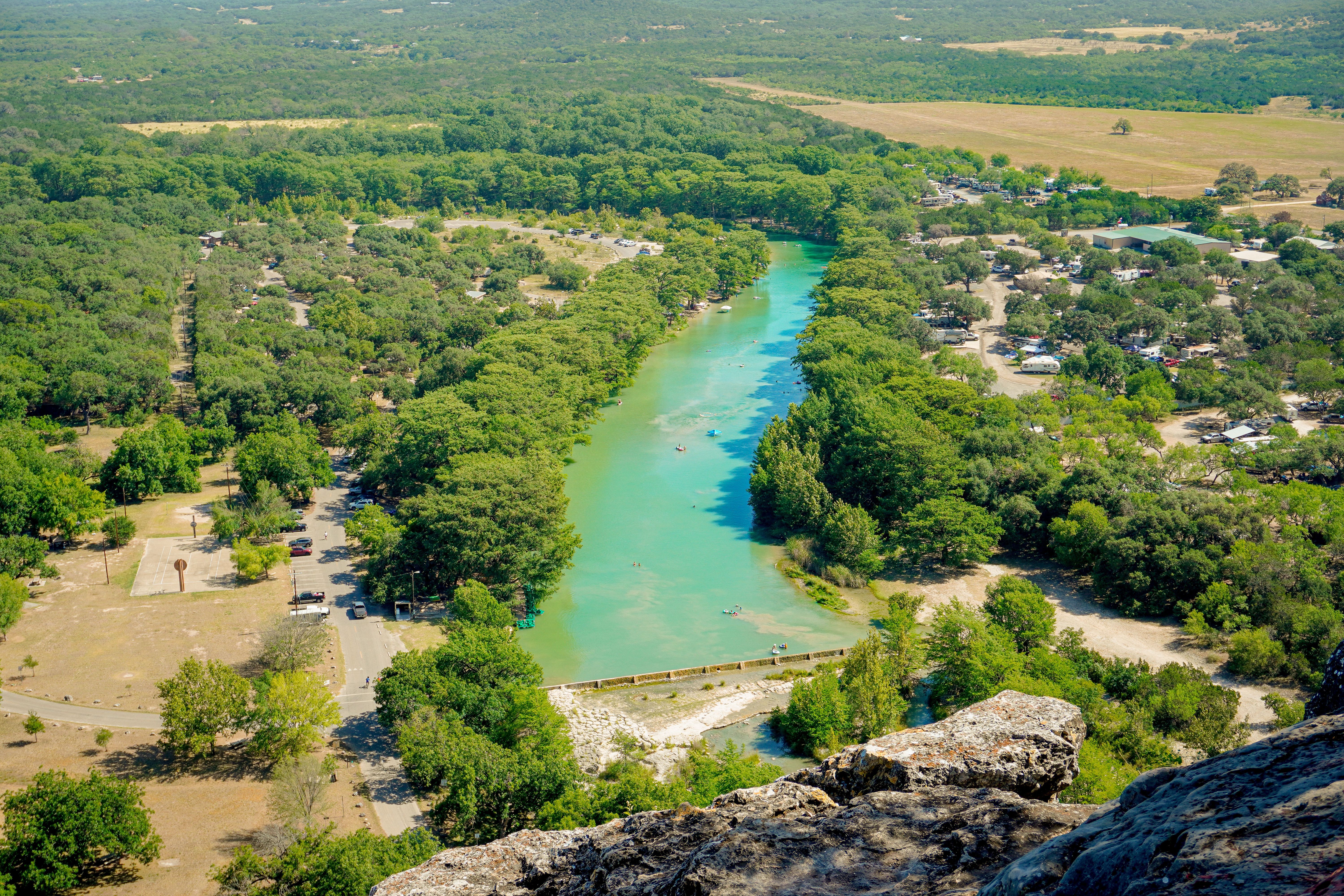
A conservation easement can save a Texas landowner tens or even hundreds of thousands of dollars in federal income taxes, and it works alongside your existing agricultural exemption rather than replacing it. If you own 100 acres or more of rural Texas land, a conservation easement may be the most powerful tax-saving tool available to you, offering a one-time charitable deduction worth roughly 30 to 40 percent of your property's fair market value.
This guide walks you through exactly how the deduction is calculated, what the IRS limits mean in practice, how many years you have to absorb the full value, and why Texas landowners are uniquely positioned to benefit by combining a conservation easement with their ag exemption. You will learn how the before-and-after appraisal method works, what the 50 percent and 100 percent AGI limits mean for your tax return, and how to estimate your potential savings before hiring an appraiser.
What Is a Conservation Easement Tax Deduction?
A conservation easement is a voluntary legal agreement between a landowner and a qualified land trust or government agency that permanently limits development on a property to protect its conservation values. When you donate a conservation easement, the IRS treats it as a charitable contribution under Section 170(h) of the Internal Revenue Code. The value of your donation, which is the difference between what your land is worth before the easement and what it is worth after, becomes a federal income tax deduction.
For Texas landowners, this deduction is especially valuable because it is purely federal. Texas has no state income tax, so there is no state-level deduction or credit to split with, meaning every dollar of the deduction applies against your federal taxable income without dilution. If your land has significant development pressure or sits in a region where conservation values are high, the deduction can be substantial.
INFO
Texas has no state income tax. This means the conservation easement deduction is purely a federal benefit. Unlike landowners in Colorado or Virginia, who may also receive state tax credits, Texans get the full value of the federal deduction without any state-level offset.
How Is the Deduction Calculated? The Before-and-After Appraisal
The IRS requires a qualified appraisal using the before-and-after method to determine the value of your conservation easement donation. Here is how it works:
-
Before value: A certified appraiser determines the fair market value of your property at its highest and best use, which typically means its development potential. For example, a 200-acre ranch 30 miles outside Austin might be valued at $15,000 per acre if it could be subdivided into 20-acre ranchettes, for a total of $3 million.
-
After value: The appraiser then determines what the same property is worth after the easement restrictions are in place, taking into account that development rights have been permanently extinguished. That same 200-acre ranch might be worth $8,000 per acre after the easement, for a total of $1.6 million.
-
Deduction value: The difference between these two figures, $1.4 million in this example, is the value of your charitable contribution and the basis for your federal income tax deduction.
The key driver of your deduction is the development potential you are giving up. Land in the path of suburban growth generates larger deductions than remote rangeland, even if the remote land has higher ecological value. Appraisers look at comparable sales, zoning, proximity to utilities, and regional growth patterns to establish the before value.
The AGI Limits: 50 Percent vs 100 Percent
The IRS does not let you deduct the entire easement value in a single year. Instead, your annual deduction is capped at a percentage of your adjusted gross income. There are two tiers:
Standard Limit: 50 Percent of AGI
For most taxpayers, the conservation easement deduction is limited to 50 percent of AGI per year. If your AGI is $120,000, you can deduct up to $60,000 in any single tax year from your easement donation. Any unused portion carries forward to future years.
Qualified Farmer or Rancher: 100 Percent of AGI
If more than 50 percent of your gross income comes from farming or ranching, you qualify for the enhanced 100 percent AGI limit. This means you can deduct the full value of your conservation easement against your farm or ranch income each year until the entire deduction is absorbed. For a rancher with $80,000 in AGI, the full $80,000 can be offset annually rather than just $40,000 under the standard 50 percent rule.
NOTE
Qualified farmer or rancher status can effectively double your annual deduction capacity. If your land generates the majority of your income through cattle, hay, timber, or other agricultural production, make sure your tax preparer applies the 100 percent AGI limit.
This distinction is critical for Texas landowners because many already operate under an agricultural exemption, meaning their land produces qualifying income. The 100 percent AGI limit turns what could be a 16-year deduction timeline into something much shorter for working farms and ranches.
The 16-Year Absorption Timeline
Unused conservation easement deductions carry forward for up to 15 years beyond the year of the donation, giving you a total of 16 tax years to absorb the full value. Here is what that looks like in practice:
Standard Scenario: Landowner With $100,000 AGI
Suppose you donate a conservation easement valued at $400,000 and your AGI is $100,000. At the standard 50 percent limit, you can deduct $50,000 per year. That means:
- Year 1 (donation year): $50,000 deducted, $350,000 remaining
- Years 2 through 8: $50,000 each year, fully absorbed by year 8
- Total tax savings at a 24 percent marginal rate: approximately $96,000
In this scenario, you finish in 8 years, well within the 16-year window.
Stretched Scenario: Landowner With $50,000 AGI
If your AGI is only $50,000 and your easement is valued at $400,000, the math gets tighter:
- Year 1: $25,000 deducted, $375,000 remaining
- Years 2 through 16: $25,000 per year for 15 more years
- Total deducted after 16 years: $400,000 (fully absorbed right at the limit)
At a 12 percent marginal rate on $50,000 AGI, you would save roughly $48,000 in federal taxes over the full 16-year window. The deduction does not expire if you do not use it all, but anything not absorbed by year 16 is lost.
Qualified Farmer Scenario: Rancher With $80,000 AGI
A qualified farmer or rancher with $80,000 AGI and a $400,000 easement deduction:
- Year 1: $80,000 deducted at 100 percent AGI, $320,000 remaining
- Years 2 through 5: $80,000 per year, fully absorbed in 5 years
- Total tax savings: significantly faster absorption, same total value
Stacking With Your Agricultural Exemption
One of the most common misconceptions among Texas landowners is that a conservation easement cancels or replaces an agricultural exemption. It does not. These two tax tools address different tax types and work together.
Your agricultural exemption, also called 1-d-1 agricultural valuation, reduces your annual property tax bill by valuing your land based on its agricultural productivity rather than its market value. This typically saves 70 to 90 percent on property taxes each year. A conservation easement provides a one-time federal income tax deduction based on the development rights you give up. They serve entirely different purposes and are administered by different government entities.
A landowner can absolutely hold both: pay dramatically reduced property taxes through the ag exemption each year, and take a six-figure federal income tax deduction through a conservation easement. The conservation easement does not affect your county appraisal district's agricultural valuation as long as you continue meeting the degree of intensity requirements for your qualifying agricultural use.
WARNING
Not all land trusts accept ag-exempt properties. Some conservation organizations prefer properties without existing agricultural uses if their mission focuses on passive habitat preservation. However, many Texas land trusts, including those participating in the Texas Farm and Ranch Lands Conservation Program, actively work with working farms and ranches. Discuss your ag exemption status early in the conversation with any land trust.
What a Conservation Easement Is Worth in Texas
Easement values vary widely by location, property size, and development pressure. In Texas, typical conservation easement values range from 30 to 40 percent of a property's market value, though the exact percentage depends on where your land sits.
The highest per-acre values are found in the Hill Country west of Austin and San Antonio, where rapid suburban expansion creates strong development pressure. A 200-acre property in Kendall or Hays County might see easement values of $3,000 to $5,000 per acre, reflecting the high demand for ranchette subdivisions. Properties in more remote regions like the Trans-Pecos or South Texas brush country typically generate lower per-acre values but may qualify for matching funds through state programs.
The Texas Farm and Ranch Lands Conservation Program, administered by the Texas Parks and Wildlife Department since January 1, 2016, provides matching grants to land trusts to purchase conservation easements from willing landowners. The program is small: TPWD's approved-projects table lists roughly 20 distinct counties with funded projects statewide. If your land sits in a county where TFRLCP has been active, you may be able to combine a donated easement with a partial purchase, increasing your total financial return. Check TPWD's current project list rather than assuming your county is covered.
For a deeper look at how conservation easements compare to ag exemptions specifically, read our conservation easement vs ag exemption comparison.
Texas Regions Where Conservation Easements Are Most Active
Easement activity in Texas clusters where development pressure is highest, which is also where the before-and-after value gap is widest.
The Hill Country west of Austin and San Antonio sees the most activity and the highest per-acre values, driven by ranchette subdivision demand and by conservation priorities around scenic rivers, aquifer recharge, and wildlife habitat. The Dallas-Fort Worth expansion zone is the second cluster, where easements tend to focus on holding onto remaining agricultural land and watershed. East Texas timber country produces lower per-acre values but pairs well with timber valuation for combined planning. On the Gulf Coast, prairie and wetland easements protect habitat and storm surge buffers, and may qualify for federal programs beyond the standard charitable deduction.
We do not publish a county-by-county count of active easements, because no complete public register exists. TPWD's approved-projects table covers TFRLCP-funded projects only, and privately donated easements to land trusts are not centrally reported. Ask the land trusts working in your area what they have closed nearby.
The IRS Form 8283 Filing Requirements
To claim the deduction, you must file IRS Form 8283, Noncash Charitable Contributions, with your tax return. Conservation easement donations exceeding $5,000 require a qualified appraisal and Section B of Form 8283 must be completed. On the current form (Rev. December 2025), the appraiser signs the Declaration of Appraiser in Part IV, and the donee organization, typically the land trust holding the easement, signs the Donee Acknowledgment in Part V.
Key requirements for the appraisal include:
- The appraiser must be a qualified appraiser as defined by IRS regulations
- The appraisal must be completed no earlier than 60 days before the donation date
- The appraisal must include the before-and-after valuation methodology
- You must attach the appraisal summary to your return for the year of the donation
For step-by-step guidance on completing this form, see our IRS Form 8283 guide for conservation easements.
Does the Deduction Survive an IRS Audit?
Conservation easement deductions face scrutiny from the IRS, and properly documented easements with qualified appraisals and legitimate conservation purposes routinely survive audit. The key risk factors that trigger IRS review include inflated before-values, easements that do not actually restrict development in a meaningful way, and syndicated conservation easement transactions where multiple investors pool funds.
Individual landowners who donate easements on property they have owned for years, work with accredited land trusts, and obtain appraisals from qualified professionals face relatively low audit risk. The IRS has specifically targeted syndicated deals, not working farms and ranches.
Document your donation thoroughly. Keep the appraisal, the deed of conservation easement, the baseline documentation report, and correspondence with the land trust. If your easement value exceeds 50 percent of your AGI for the year, expect the deduction to be spread across multiple returns, which increases the number of years the IRS could review the deduction.
How to Estimate Your Potential Savings
The easiest way to get a rough estimate is to use our conservation easement tax calculator. It lets you input your property value, estimated easement percentage, AGI, and farmer/rancher status to see your total deduction and annual savings.
For a more precise number, you will need a qualified appraisal, but the calculator gives you a starting point to decide whether moving forward is worth the cost. The typical appraisal for a conservation easement in Texas costs between $3,000 and $8,000 depending on property complexity.
INFO
Conservation easement appraisals are not the same as property tax appraisals. Your county appraisal district's valuation has no bearing on the before-and-after analysis for IRS purposes. You need a separate, qualified appraiser with experience in conservation easement valuation.
Where to Go Next
If you are considering a conservation easement on your Texas land, here are your next steps:
-
Run the numbers using our conservation easement tax calculator to estimate your potential deduction.
-
Read the complete guide to Texas conservation easements for a broader overview of the process, costs, and legal requirements.
-
Compare with your ag exemption using our conservation easement vs ag exemption comparison to understand how both tools work together.
-
Find a consultant through our conservation professional directory to connect with easement attorneys, appraisers, and land trust representatives serving your county.
-
Check your county's conservation activity by looking up your county on our county lookup tool to see whether TFRLCP or other programs are active in your area.
A conservation easement is a permanent decision with permanent tax benefits. Take the time to understand the numbers, consult qualified professionals, and make sure the conservation values you are protecting align with your long-term vision for your land.
Sources
This reflects federal and Texas law as of August 2026. The Texas Farm and Ranch Lands Conservation Program moved from the General Land Office to the Texas Parks and Wildlife Department effective January 1, 2016, and Form 8283 part numbering reflects the December 2025 revision.
- Texas Parks and Wildlife Code Chapter 84 - the Texas Farm and Ranch Lands Conservation Program
- Texas Tax Code Section 23.51 - qualified open-space land, the valuation an easement typically sits alongside
- Texas Comptroller, Agricultural and Timber Property Tax - how the ag valuation interacts with other land programs
Verified August 6, 2026. Deduction amounts, AGI limits, and carryforward treatment depend on your individual tax situation; the examples here are illustrative. There is no complete public register of Texas conservation easements, so county-level activity counts should come from TPWD's project list or from local land trusts, not from secondary summaries.